By Gocha Mirtskhulava
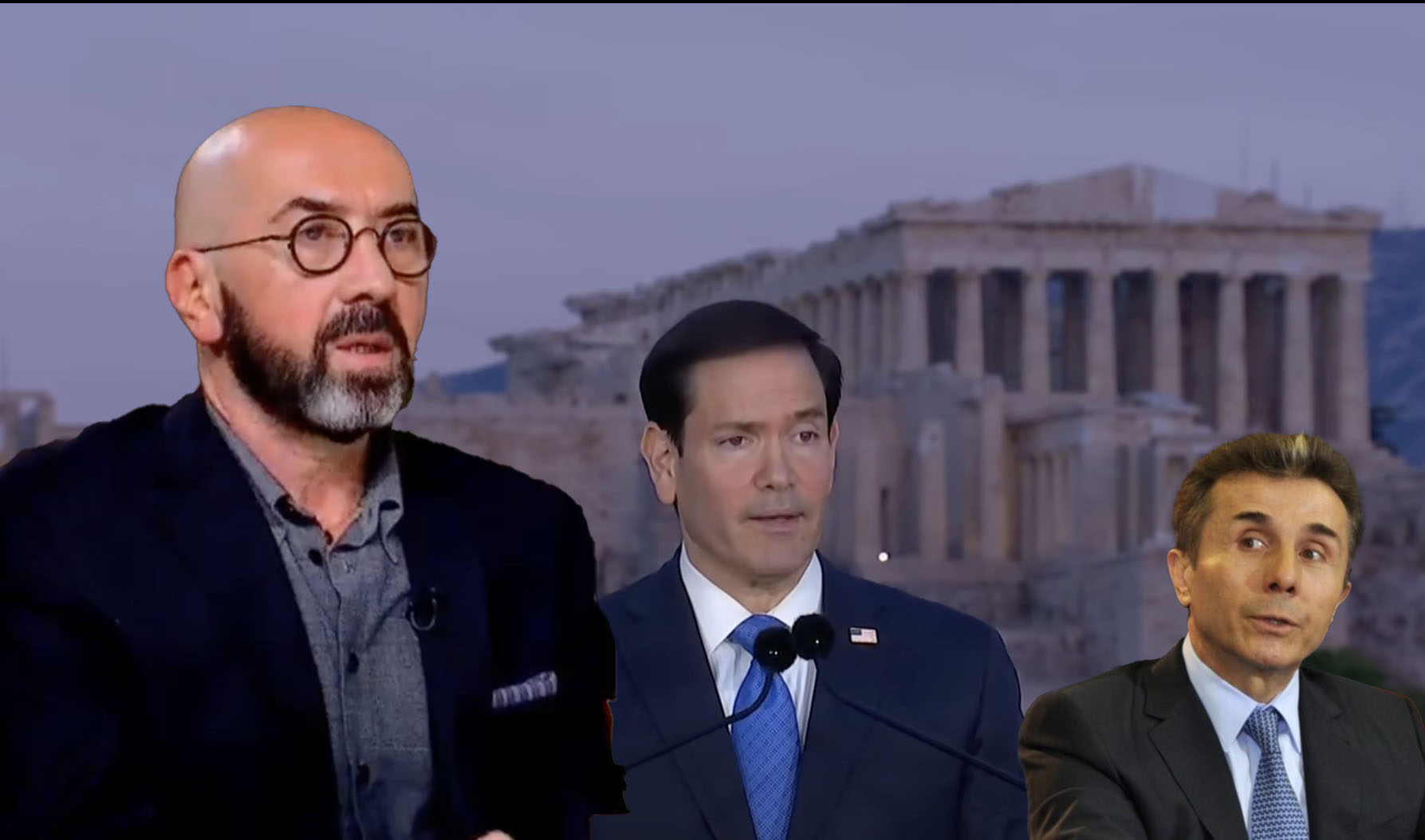
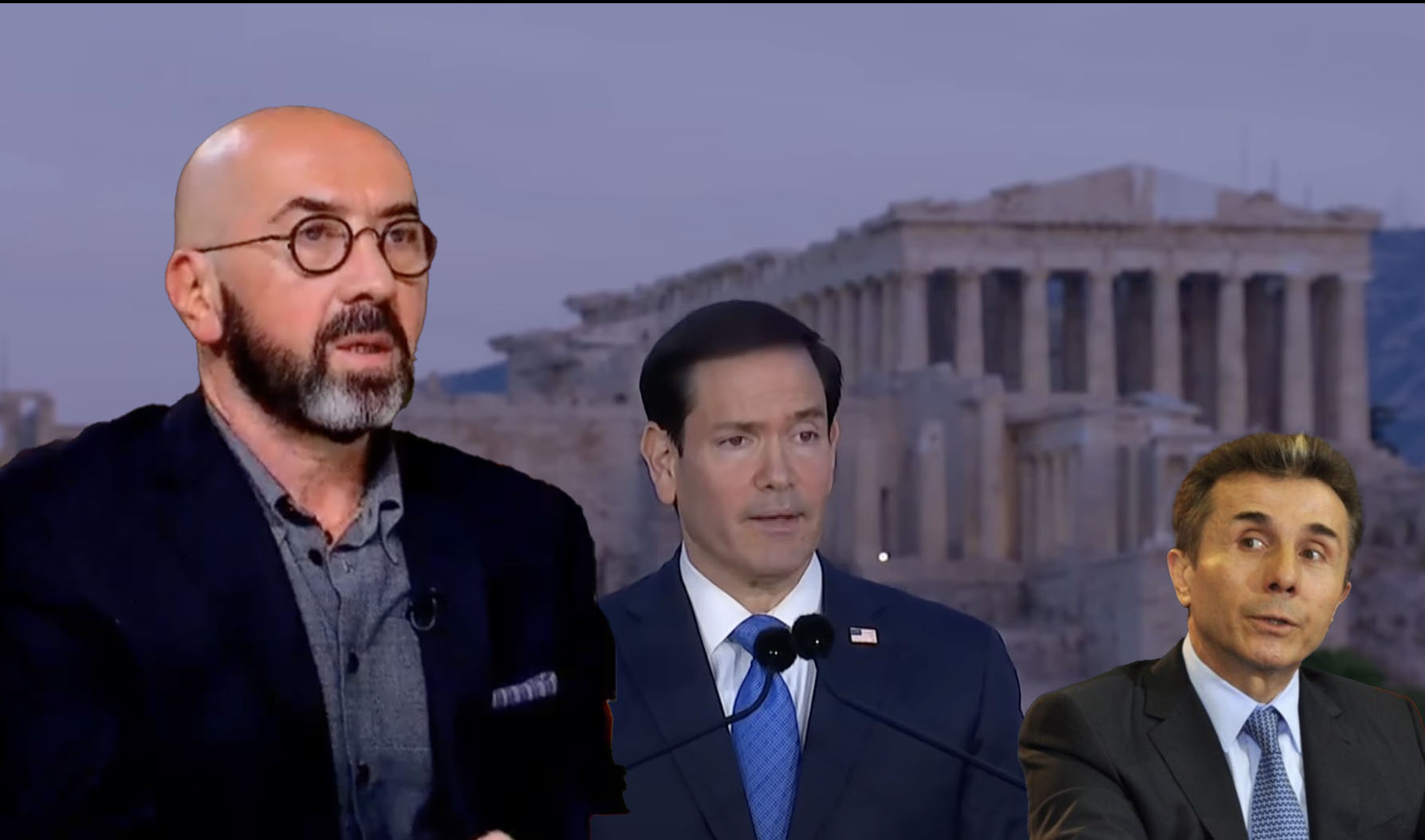
In a speech delivered in Athens against the backdrop of the Acropolis, U.S. Secretary of State Marco Rubio spoke about the foundations of Western civilization, its strength, and its future. Freedom, individualism, human dignity, the pursuit of knowledge, competition, responsibility, national sovereignty, and strong alliances: these were the principles whose importance came through in his address.
Listening to this speech, one cannot help but think of Georgia, a country whose history is a history of centuries-long engagement with Western civilization.
Ancient Colchis was connected to the Greek world through trade and cultural ties, and Phasis and Dioscurias were important centers of that exchange. Historical Iberia maintained political and diplomatic relations with the Roman Empire. Later, Christianity gave Georgia another significant civilizational bond with the European Christian world.
Recalling this history matters not because we should imagine medieval Georgia as a member of the modern European Union, but because we need to recognize that Georgia's relationship with the European world is not a political idea artificially imposed on it. It has deep historical roots.
Particularly noteworthy in Rubio's speech is his argument that the ancient Greeks "built upward," striving for excellence, for victory, and for the expansion of knowledge and human potential. He criticizes an approach that subordinates excellence to mediocrity and replaces competition with uniformity.
This is where a fundamental contradiction emerges with Georgia's current political reality.
The ruling Georgian Dream party speaks of sovereignty, national interests, and tradition, yet its political decisions draw ever more frequent criticism over restrictions on political competition, attempts to ban opposition parties, and the state of civil liberties and independent institutions.
The strong state Rubio describes rests on the abilities of its citizens, their sense of responsibility, and their drive to develop. In Georgia, however, attempts to restrict political competition and the authorities' attitude toward dissent point in an entirely different direction.
Rubio's speech also gives a special place to honor, duty, and loyalty to principle. These values mean more than admiration for historical heroes. For a modern state, their practical measure is the protection of human rights, the rule of law, and respect for the dignity of every citizen. It is precisely the international criticism voiced in these areas that raises serious questions about Georgian Dream's policies.
Another fundamental theme of Rubio's address is international alliances. The Secretary of State says plainly that, in the face of contemporary threats, nations must rebuild and strengthen their institutions and their alliances. At the same time, he stresses that the purpose of alliances is not to abolish the sovereignty of their member states but to defend it. In his view, preserving national identity and pursuing international partnership are not mutually exclusive.
This matters especially for Georgia. A country with part of its territory under occupation, whose security depends on regional and global developments, cannot treat international partnership as merely a matter of foreign-policy choice. For Georgia, strong alliances are an opportunity to build additional guarantees of its security, independence, and development.
Here, too, a contradiction with Georgian Dream's rhetoric comes into view. The government often explains its strained relations with Western partners as a defense of sovereignty. Rubio's reasoning runs the other way: sovereignty and alliances are not alternatives to each other. On the contrary, a well-built partnership strengthens a state's independence rather than weakening it.
Georgia's own history reminds us of this. Since the era of David the Builder, the country's state interests have often demanded the pursuit of strong international ties. In today's world, that task takes entirely different institutional forms: integration with the European Union, Euro-Atlantic cooperation, and close partnership with Western democracies.
The central question, then, is this: when the world's leading nations are talking about strengthening alliances in response to new threats, why should Georgia find itself increasingly distant from its own strategic partners? How can weakening the very international ties whose strengthening could serve Georgia's independence and security be justified in the name of defending sovereignty?
But the problem is not only a contradiction of values.
The global political architecture is changing. States are competing to strengthen their positions in new technologies, the economy, defense, education, and international partnerships. Today's agenda demands competition, innovation, institutional strength, and the capacity to develop.
Against this backdrop, Ivanishvili's Georgia is drifting ever further from the modern world's development agenda. While others are thinking about the opportunities of the future, here in Georgia much of our political energy goes into holding on to power, restricting opponents, and fighting dissent.
And here one of Rubio's metaphors takes on a particularly sharp meaning in the Georgian context.
"The men who made the Parthenon," he said, "they built upwards."
In Georgia today, what is mainly rising upward are Bidzina Ivanishvili's villas, apartments, and business centers, while state institutions, political freedom, and the country's European prospects face serious challenges.
This is the political paradox of our time: a country with centuries of engagement with Western civilization is now governed by a political force whose decisions are holding back its rapprochement with that very world.
While the world talks about building upward, in Georgia it is the symbols of private power that are rising, and the state, instead of developing, faces the threat of decline.