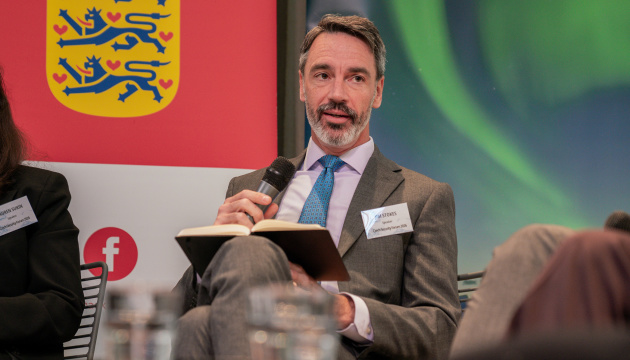
Jim Stokes, a GLOBSEC expert and former NATO Director of Nuclear Policy (2023–2025), made the remarks in an interview with Ukrinform.
“In this hypothetical situation, if Russia uses nuclear weapons, NATO will have to respond... The response must be credible,” Stokes said.
He recalled NATO’s stated readiness to inflict damage far exceeding any potential gains. The response could involve nuclear weapons, conventional weapons, or a combination of both. The decision would be made at a later stage, as it would be unwise to reveal to an adversary where these red lines lie or exactly how a response might be formulated and carried out, the former NATO official emphasized.
Stokes said that in an emergency or during a crisis, the Alliance could make political decisions and implement them very quickly. He added that member states were also capable of acting independently and swiftly. The United States, the United Kingdom, and France could each independently employ their nuclear forces to deter aggression against the Alliance, not just a nuclear attack. Stokes described this as a major advantage for NATO.
Read also: Expert: Russia must accept reality of NATO’s 32 member countriesSince Russia’s full-scale invasion of Ukraine and NATO’s designation of Russia as a threat to the Alliance, NATO has been adapting its nuclear deterrence posture, including by modernizing its nuclear forces. Exercises and preparations for a potential NATO nuclear operation demonstrate that the Alliance is capable of carrying one out effectively with its current capabilities and force posture, the former official said.
He noted that NATO aircraft could deliver free-fall nuclear bombs. Some advocate the option of launching missiles from sea-, land-, or air-based platforms. In Stokes’s view, all options should remain on the table.
As previously reported, British and French fighter jets conducted joint exercises over the Mediterranean for the first time in October, involving French nuclear forces and demonstrating deeper defense cooperation between the two countries amid tensions with Russia. In July 2025, the two countries agreed to deepen their cooperation on nuclear deterrence in response to growing threats to Europe and uncertainty over the role of the United States as an ally.