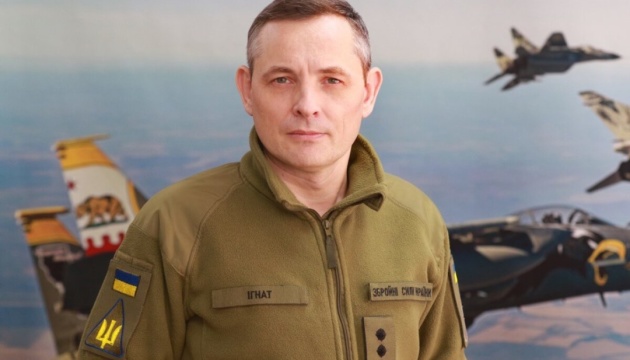
Ukrinform reports this, citing Ihnat's remarks during a televised broadcast.
"You can see that 39 missiles of various types were used against Ukraine, which is why we provide this list, as the exact type can be identified from the debris. Of course, the enemy's capabilities for using ballistic missiles are not unlimited. Components manufactured in Europe just two or three weeks earlier are often found. This is because some components are made by manufacturers based in Europe or the United States. The same applies to drones, by the way," he said.
Ihnat specified that the missiles used in the attack on Ukraine included Iskander-M, KN-23, S-400, Zircon, and Oniks missiles.
Read also: Interception rate for Russian jet-powered drones rises to 76% — Ihnat"These are the weapons used in ballistic attacks, and the only system that can be relied upon to intercept them is Patriot. Four missiles were intercepted by the system. We will not specify where or how, but, frankly speaking, that is not many," he noted.
According to the spokesperson, the missiles targeted Kyiv and the Kyiv region, with Ukraine's energy infrastructure in the crosshairs.
"Regarding the missiles, the enemy is indeed using a mixture of different types, including S-400 missiles and Zircon missiles. Naturally, some missiles are more expensive than others. Therefore, to carry out such a massive attack from different directions, the enemy uses various types of missiles. Their flight characteristics also differ," he said.
Ihnat added that debris from many different types of missiles bears recent manufacturing dates. According to him, this also applies to Kalibr and Kh-101 cruise missiles.
As Ukrinform previously reported, the European Union has stressed the importance of disrupting Russian supply chains and funding that enable Russia's military-industrial complex to manufacture missiles used in attacks on Ukraine.