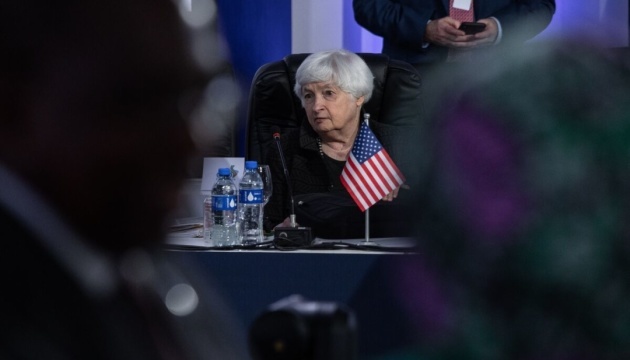
She said this in an interview with Bloomberg, Ukrinform reports.
"I don’t see a real substitute for Congress providing Ukraine the aid it needs this year,” necessary assistance this year. I don't think anyone can fill that gap," said Yellen.
Although the European Union has already approved very substantial funding for Ukraine, and Japan has also contributed, the overall amount on the table seems insufficient, the treasury secretary believes.
In her opinion, these funds can help Ukraine in the short term while the country is awaiting more extensive assistance.
Read also: NBU: Transfer of frozen Russian assets to Ukraine has no alternative
Currently, more than $60 billion from the proposed U.S. emergency aid for Ukraine has remained stuck in Congress for months. After the Senate endorsed the bill, the House is yet to make its vote.
Earlier, U.S. President Joe Biden said he wanted the G7 to make progress on utilizing frozen Russian sovereign assets ahead of the leaders' meeting in June.
France and Germany, along with the European Central Bank, have expressed concerns about Russia’s possible retaliation against European assets and the impact on financial stability and the euro's status as a reserve currency, particularly as more than two-thirds of the assets in question are located in Europe.
Yellen acknowledged Europe's concerns but said her counterparts were open to cooperation.
Read also: G20 finance chiefs fail to reach joint statement amid disagreements over war in Ukraine
As reported earlier, the European Union, G7 economies, and Australia have frozen about $282 billion in securities and cash. All parties agree that these funds must remain unavailable to Russia unless it agrees to help rebuild Ukraine, but the actors differ on the legality of a full seizure of these assets.
Photo: Maira Erlich/Bloomberg